The first version was a hypothesis. Now it's real.
When I wrote about my location-based gamification app Markur last summer, the platform was an exploratory experiment more than a working product. It had promise, and the bones were solid. The first version was taken offline in August 2025 as I rethought the structure and purpose. There were too many open questions. Is this a privacy concern? How hard will this be to maintain? How expensive will it be to keep up? Will people even... use it?
The months since have answered most of those questions.
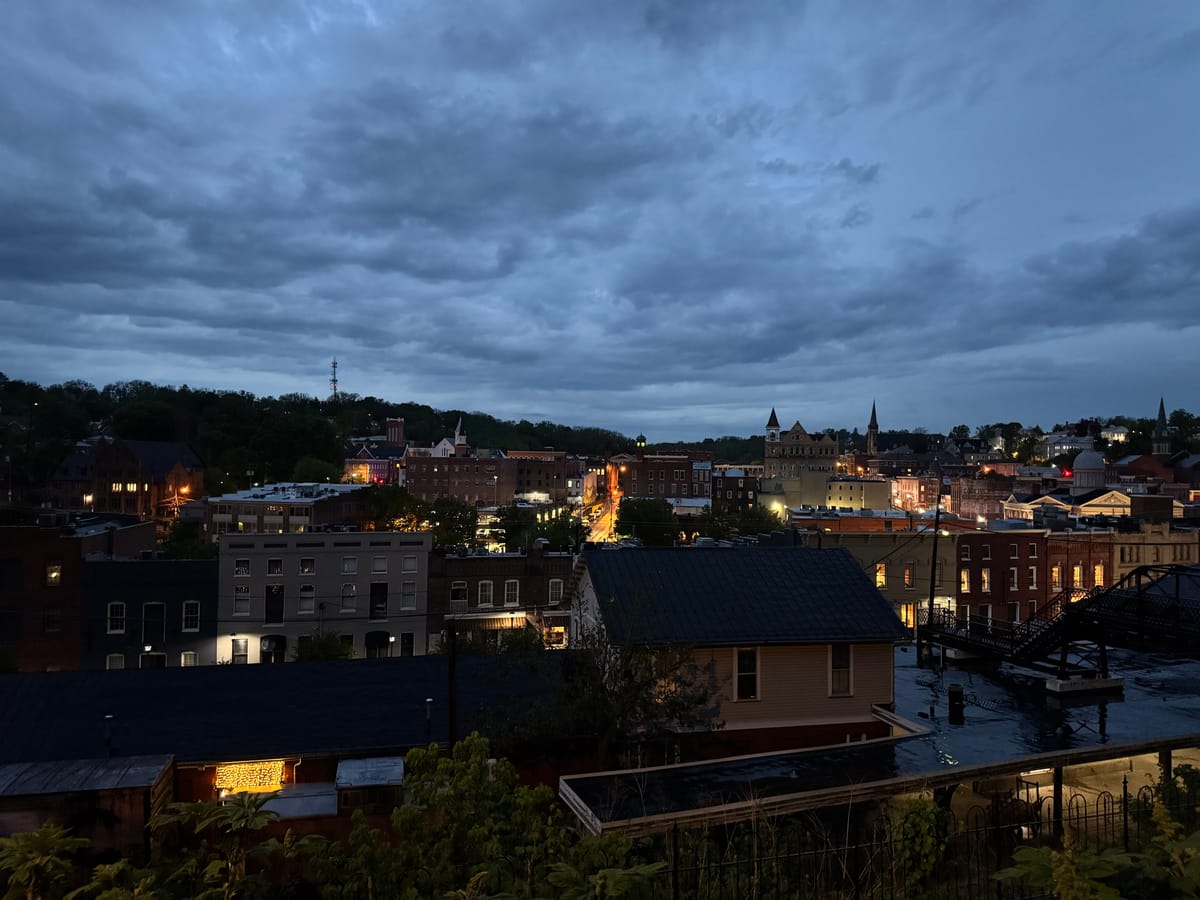
QCMM.app is the proof of concept Markur always needed. It's a location-based discovery and community app built around Queen City Magic & Mischief, a festival coming to downtown Staunton, Virginia each September. The app maps over 119 locations across the city's historic core, giving festival-goers a way to explore, check in, and connect before, during, and after the event. It runs on a rebuilt version of the Markur platform, now formally rebranded as Markur.app, and the gap between what the first version was and what this one is, is significant.
Starting Over the Right Way
The original Markur was a generalist platform. Location-based, yes, but pointed at everything and therefore aimed at nothing. QCMM.app took the opposite approach. One city. One festival. One tightly scoped set of locations to explore.
That constraint turned out to be a gift. After the first version came down, I spent time with early testers, dug into feedback, and did the kind of research and ideation that's easy to skip when you're deep in a build. Patterns surfaced. The community tools needed more depth, and the check-in mechanic, the core of the whole thing, needed a rethink. With a specific place and a specific audience to design for, the architecture decisions became much cleaner. The platform now supports a multi-tenant Experiences model, meaning QCMM.app is the first instance of something repeatable. A future sports-Markur, or a festival-Markur for a different city, or a college campus-Markur can be deployed from the same codebase. That capability exists now. The scaffolding is real.
This is the part that gets me most excited, honestly. The first Markur was a prototype of an idea. QCMM.app is a prototype of a business.
The Map Got a Major Overhaul
One of the quieter but more consequential changes was replacing Mapbox with Leaflet and OpenStreetMap across the entire application. Mapbox is a capable platform, but its pricing model is a liability at the early stage of a product. Leaflet is open source, battle-tested, and more than sufficient for what Markur needs to do.
The 119 Staunton locations are now organized with the block-level color coding that the festival currently uses. The colors create a visual system for navigating the downtown grid. Location editors get a draggable map pin with an auto-refreshing Street View preview. Inactive or non-participating locations are handled gracefully instead of just disappearing from the interface.
Small details that build on top of each other compound into something useful and interesting.
How Check-ins Actually Work Now
The original Markur used GPS to verify check-ins. You walked up to a location, the app pinged your coordinates, the platform confirmed you were close enough, and the check-in registered. Clean in theory.
Testers pushed back. Not loudly, but consistently. Handing over real-time location data to a platform you just downloaded for a festival is a different proposition than handing it to Google Maps, an app you've negotiated a decade-long truce with. People were fine with the concept. They weren't comfortable being tracked to pull it off. That feedback mattered, and the QR code system came directly out of it.
A code lives at each physical location. You scan it, the check-in registers, and the app never needs to know where your phone is. The trust surface shrinks considerably. For a community platform trying to earn its first real users, that's not a small thing.
The experience improved too. GPS check-ins carry a particular awkwardness — standing outside a building, phone in the air, waiting for a lock that may or may not come. QR codes are immediate. You find the marker, scan it, move on. The friction disappears and something more intentional takes its place. You're physically engaging with the location rather than just standing near it.
There's a security detail worth noting as well. QR tokens are now scrubbed from browser history after use, closing a quiet vulnerability the first version left open. The check-in happens and then it's gone.
The App Lives on Your Home Screen
QCMM.app is a Progressive Web App. That means no App Store, no Google Play, no waiting for a review cycle. Festival-goers install it by visiting the site and tapping "Add to Home Screen" — instructions for both iOS and Android are built into the How It Works page.
The app badge updates with unread message counts. Push notifications work on both iOS and Android. It behaves like a native app because, for most practical purposes, it is one. The decision to build on PWA architecture rather than a native app wasn't just a cost consideration — it's a distribution decision. Anyone at the festival can be up and running in thirty seconds without touching an app store.
A Community Platform That Actually Feels Like One
The community layer in the original Markur was thin. A feed, some discussion boards, the skeleton of something social. This version rebuilt it from the ground up.
The public feed now supports likes, real-time updates, inline post composition, pin events, top contributors, and post categories. Users can flag, edit, and delete their own content. Comment counts surface in the action row. The profile layout dropped tab-based navigation in favor of stacked sections — cleaner to read, better on mobile. Avatar uploads now compress to WebP automatically. All profiles are publicly visible by default, removing the friction that friend and connection graphs create in early-stage communities. Stats and achievements live in the Adventure Map section of each profile, so the exploration layer and the social layer stay connected.
The Staff Space
This is the part of the platform that doesn't get talked about in location-app writeups, because most location apps don't have it. QCMM.app has a full staff collaboration environment built in.
Group discussions, direct messages, admin notes, and file attachments. Pinned posts, post labels, emoji reactions, @mentions, inline editing, threaded replies on comments. Task completion and priority flagging on posts. Load-more pagination. Push notifications for group activity, mentions, and direct messages on both iOS and Android. Running an event like Queen City Magic & Mischief involves a lot of people coordinating across a lot of moving pieces. The staff space exists so that coordination happens inside the platform, not scattered across texts and email chains.
The operators using Markur get a real tool. That was a deliberate design decision, and it shapes how the platform scales to future events.
The Pin System Grew Up
Pins were always central to the Markur concept. Check into a location, earn a pin, build a collection. In QCMM.app, the pin artwork system is now driven by custom SVGs with admin upload capability. Pins display in a grid on user profiles alongside exploration stats in the Adventure Map section. The system is simple, but it creates the kind of tangible reward loop that keeps people moving through the city.
This is the gamification layer behaving as intended. It's not decorative. The pins are the reason to keep going.
Security Wasn't an Afterthought
The first version had Row Level Security vulnerabilities that I was candid about. This version addressed them. Server-side rate limiting is in place. Security headers are configured in the Vercel deployment. Database performance got attention too — redundant queries reduced, indexes added, lazy loading active on all card and grid images.
None of this is glamorous work. It also doesn't get discussed enough in the "I built an app with AI" genre of writing, because performance and security fixes don't make for compelling screenshots. A community platform that leaks user data or buckles under load isn't a product. Getting this layer right was a precondition for taking QCMM.app seriously.
What the Design Overhaul Actually Looked Like
The original Markur had functional UI. QCMM.app has a design system. The distinction matters.
Full-bleed hero backgrounds on location detail pages and experience home pages. A two-row navigation with a fixed global header and scrollable experience tabs beneath it. A landing page and a How It Works page designed as actual entry points, not afterthoughts. Consistent typographic treatment sitewide — heavy weight headings, tight tracking, a color token system that holds together across a lot of surface area.
Good product design isn't usually visible as design. It's visible as confidence. The app feels like something a real company built, which is the point — because Markur.app will be a real company, and QCMM.app is its first product.
Open Registration, Real Stakes
The invite code requirement is gone. QCMM.app uses open registration with email verification, which removes the biggest barrier to organic discovery.
This is a small but meaningful philosophical shift. The invite-only model made sense when the platform was too raw for strangers. It doesn't make sense when you're trying to build a community around a real festival with real attendees already planning their September weekend. The app now has enough polish to put in front of people who have no idea what Markur is, which is exactly the audience that will tell you whether the concept actually holds up.
What Comes Next
QCMM.app is a proof of concept in the most literal sense. It exists to answer one question: can a platform like this work, and can it work well enough to justify building the next instance?
The branding reflects that ambition. Markur.app is the company. QCMM.app is the first product. The homepage and About page make that relationship explicit, with dedicated Markur sections that frame what the platform is and where it's going.
Watching this project go from an experiment to something I'd demo to anyone — that's the feeling I was building toward. September is going to be a real test. QCMM.app is live right now if you want to see where it is.
QCMM.app is live now at qcmm.app. It's built for the Queen City Magic & Mischief festival in Staunton, Virginia this September. The platform is built on Markur.app, a location-based community framework for physical discovery. If you're going to the festival, start exploring now.




Comments ()